How to alleviate Elbow Pain

Elbow pain is a common issue that can affect a wide range of people.  Two of the most common types of elbow pain include:  tennis elbow (lateral epicondylitis) which affects the extensor muscles and tendons of the wrist and golfer’s elbow (medial epicondylitis) which affects the flexor muscles and tendons of the wrist.

Possible reasons for developing elbow pain include:

  • Poor grip strength.
  • Muscle imbalances between wrist flexion and extension strength.
  • Improper weight lifting technique.
  • Overuse/overload/overtraining.
  • Mobility related issues in the wrist, shoulder or thoracic spine.
  • Excessive mobility or hypermobility may also be an issue.  It tends to be more common in females than in males, and it’s usually associated with the shoulders or elbows.
  • Repetitive motion injury.
  • Poor posture.
  • Tackling an activity you don’t often do (such as digging holes for a new fence or trimming hedges).

Poor wrist, shoulder or thoracic mobility is also commonly related to elbow pain associated with exercise.  If the wrist cannot flex or extend properly, it not only causes wrist pain, but excessive stretching of the forearm muscles and strain on the elbow (possibly leading to pain).  Elbow pain can be very debilitating.  It can limit your ability to exercise as well as limit your ability to perform daily tasks.

Poor shoulder or thoracic spine mobility can also cause excessive strain on the elbow.  Consider exercises like the overhead lift or pull ups or even the squat.  If the shoulder cannot fully flex or the thoracic cannot fully extend (allowing proper shoulder flexion), then the elbows will absorb more of the load.  The lack of shoulder or thoracic mobility also affects proper alignment of the upper extremity during the movement.  Over time and with multiple repetitions, this overloading can cause pain and injury to the elbow.

Whenever one part of the body doesn’t have adequate mobility, another part will do more to allow for the movement to take place.  When an exercise is performed at a high speed, high relative weight or high repetitions, a lack of mobility can make you more susceptible to pain and injury.

Posture plays a critical role in the positioning of your extremities with movement and even when sitting (including office and/or computer work).  Improper posture combined with poor ergonomics is a top reason to develop not only elbow pain, but also neck, upper back, shoulder, and wrist pain.  Regardless if the activity is weightlifting or typing, your posture matters!  Please refer to How to Improve Posture and Eliminate Pain.

Excessive mobility can have a similar effect.  For example, if you’re performing an overhead lift, but your shoulders flex past 180 degrees, then the bar is too far behind your head.  This causes excessive force to be placed on the shoulders and elbows.  Again, this can lead to injury and pain particularly when performed at a high speed, high relative weight or high repetitions.

How to alleviate Elbow Pain:

RICE

As with many injuries, the initial treatment is RICE (Rest, Ice, Compression, and Elevation).

  • Rest.  Limit any activities that cause pain.
  • Ice.  Use ice as needed for pain and edema control.  The rule for icing is to apply ice no more than twenty minutes per hour.  Do not place the ice directly against the skin, especially if you are using a gel pack style.  A bag of frozen peas can be ideal.  Individuals with poor circulation or impaired sensation should take particular care when icing.
  • Compression.  Consider wearing an elbow compression sleeve.
  • Elevation.  Although it’s not too useful for this specific condition, it would be an excellent time to apply ice.

Self-Mobilization

Cupping is a form of muscle tissue and fascia self-mobilization.  There are many different methods and techniques you can use.  In this video, I demonstrate how to use cupping to treat elbow pain affecting the wrist extensor muscles and tendons.

Cupping can be used to treat elbow pain, elbow tendinitis, and tennis elbow.  These CupEDGE Massage Tools are easy to use and helpful for self-treating tight and restricted areas (on other parts of the body, too).  Another option would be to use a Mini Plunger.  This technique should not cause bruising or discoloration.

Work on your Grip Strength

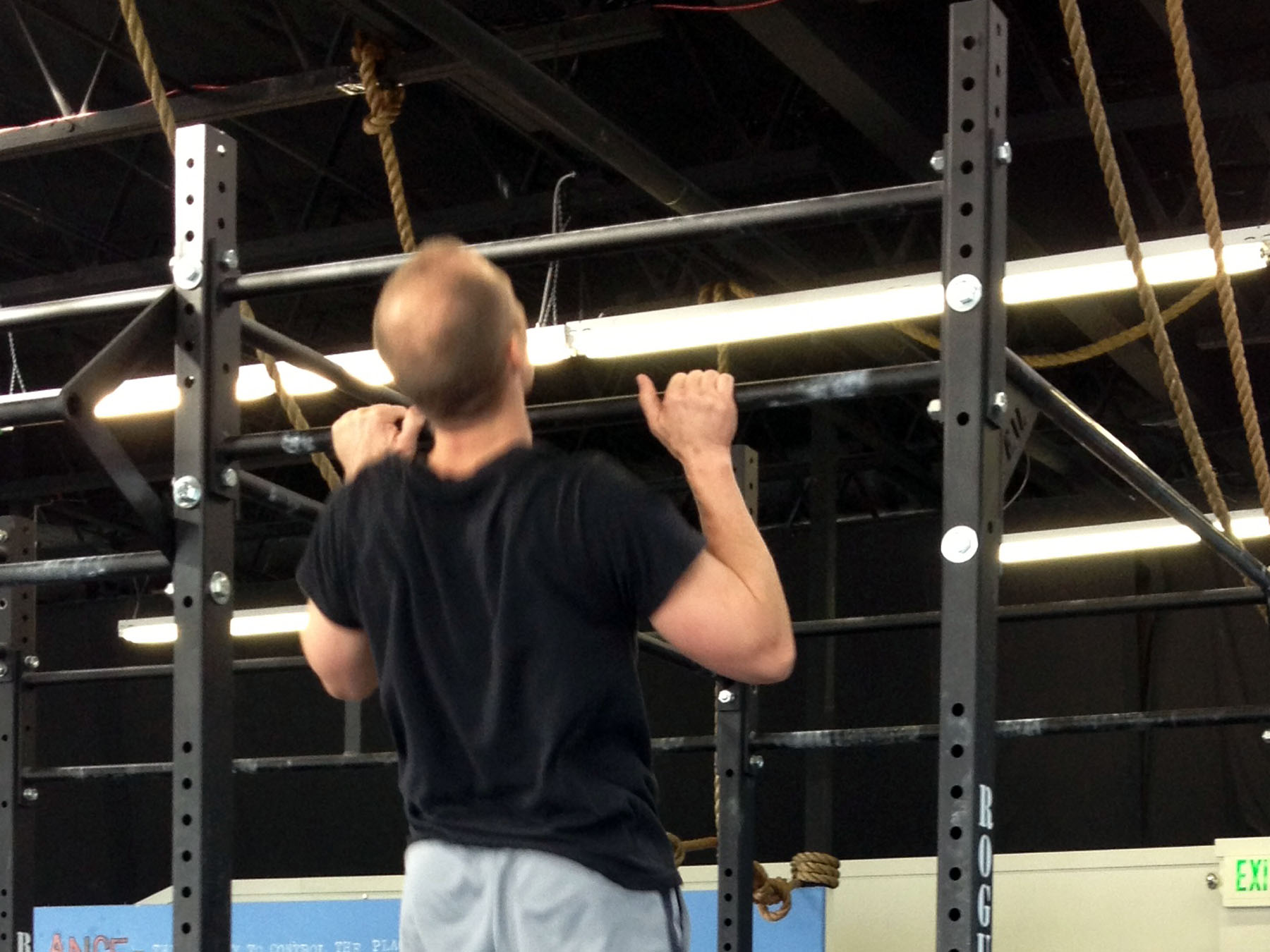
Developing proper grip strength is important in order to avoid elbow pain.  Easy exercises to train grip strength include:  dead lift; pull ups, and farmers carries.  You can even work on hanging from a pull up bar for time as a way to judge your fitness while gaining strength and endurance in your grip.

A common mistake when training grip strength is to under estimate the importance of improving finger and wrist extensor strength.  It’s critical to keep the appropriate balance between wrist flexors and wrist and finger extensors strength to lessen the risk of wrist and elbow overuse injuries such as tennis elbow or golfer’s elbow.

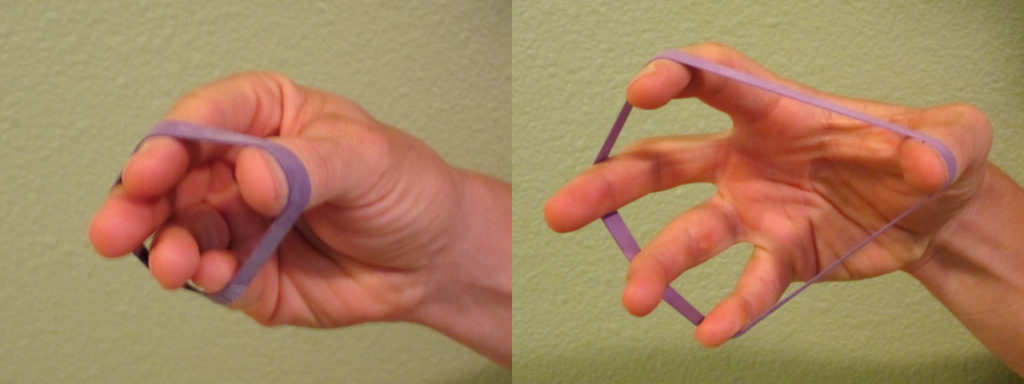
Your grip strength will improve more rapidly as your wrist and hand muscles find their optimal length tension relationship (which allows for maximum strength production).  I often recommend using a thick rubber band as a way to improve finger extension strength (as demonstrated below).  Work on extending each finger equally when performing two sets of 10-15 repetitions multiple times per week.
Elbow pain can be debilitating by limiting your ability to exercise and perform daily tasks.  Be proactive in your care and management.  If the pain persists, seek additional help.  Don’t let the pain linger.  The longer it’s left untreated, the more potential for harm and damage which potentially could lead to a longer recovery.  The American Physical Therapy Association (APTA) is an excellent resource for learning more about physical therapy as well as locating a physical therapist in your area.

Have you tried cupping as a form of self-mobilization in order to alleviate elbow pain?  What was your experience like?  Please leave your comments below.

If you have a question that you would like featured in an upcoming blog post, please comment below or submit your question to contact@thePhysicalTherapyAdvisor.com.  Be sure to join our growing community on Facebook by liking The Physical Therapy Advisor!
Q & A: Can CrossFit Cause Elbow Pain?

Q.  A lot of CrossFitters, including myself, seem to have tendinitis of the elbow or other achy elbow issues. Do you know why that is?  What exercises are we doing to cause it?  What therapy would you recommend to help the pain?  I appreciate you and love this blog that you are doing!  I always look forward to reading it! -Stephanie

A.  Thanks, Stephanie, for the great question! I have worked with quite a few CrossFitters who have experienced elbow pain.  I have treated people new to the sport and those who participate at a high level.  Elbow pain can be debilitating by limiting your ability to exercise and perform daily tasks.  I will address potential causes and how to alleviate elbow pain associated with exercise. (Note: You don’t have to be a CrossFitter to benefit from this information.)

CrossFit_ElbowExercise_6x4

Possible reasons for developing elbow pain include:

  • Poor grip strength.
  • Muscle imbalances between wrist flexion and extension strength.
  • Improper lifting technique (which is the primary problem for the newer participant).
  • The progression of training is too quick (which again tends to be an issue for the newer participant).
  • Mobility related issues in the wrist, shoulder, or thoracic spine. (Poor mobility can affect both those who are new to the sport as well as CrossFit veterans.)
  • Excessive mobility or hypermobility may also be an issue. It tends to be more common in females than in males and is usually associated with the shoulders or elbows.

Poor technique is a frequent complaint in regard to safely performing CrossFit. Many people believe that there isn’t enough emphasis placed on proper lifting technique or specific CrossFit exercise techniques (particularly with the new participant).  Some complain that the emphasis is on speed, not form, during WODs (Workout of the Day).  This may be true in some Boxes (gyms/clubs), and it’s a valid concern.

Please be honest with yourself when you start a new activity. This is especially important if you’re starting very high intensity activities with very specific movements which require a high degree of skill to perform such as CrossFit.  Beginners to CrossFit should spend the necessary time to learn the proper technique.  With any new activity, there is always a learning curve.  It’s the responsibility of the coach and the client to insure proper form.

The power clean is an example of a common movement in CrossFit and Olympic Weightlifting. This exercise can cause elbow pain when performed incorrectly.  One reason for elbow pain to develop during this movement is that the bar is reversed curled.  It causes excessive strain on the wrist extensor muscles instead of the participant exploding the bar upward, and then dipping underneath. There shouldn’t be a reverse curl movement to this lift. I witness it fairly often as a common mistake.  If you’re experiencing aches and pain in your elbow or elsewhere, please see your coach or athletic trainer to insure that your lifting technique is correct.

Poor wrist, shoulder, or thoracic mobility is also commonly related to elbow pain associated with exercise. If the wrist cannot extend properly, it not only causes wrist pain, but excessive stretching of the forearm muscles and strain on the elbows (possibly leading to pain).

Poor shoulder or thoracic spine mobility can also cause excessive strain on the elbow. Consider exercises like the overhead lift or pull ups.  If the shoulder cannot fully flex or the thoracic cannot fully extend (allowing proper shoulder flexion), then the elbows will absorb more of the load.  The lack of shoulder or thoracic mobility also affects proper alignment of the upper extremity during the movement.  Over time and with multiple repetitions, this overloading can cause pain and injury to the elbow.

Whenever one part of the body doesn’t have adequate mobility, another part will do more to allow for the movement to take place. When an exercise is performed at a high speed, high relative weight, or high repetitions, a lack of mobility can make you more susceptible to pain and injury.

Excessive mobility can have a similar effect. For example, if you’re performing an overhead lift, but your shoulders flex past 180 degrees, then the bar is too far behind your head.  This causes excessive force to be placed on the shoulders and elbows.  Again, this can lead to injury and pain when performed at a high speed, high relative weight, or high repetitions.

Top 7 Recommendations to alleviate Elbow Pain associated with Exercise:

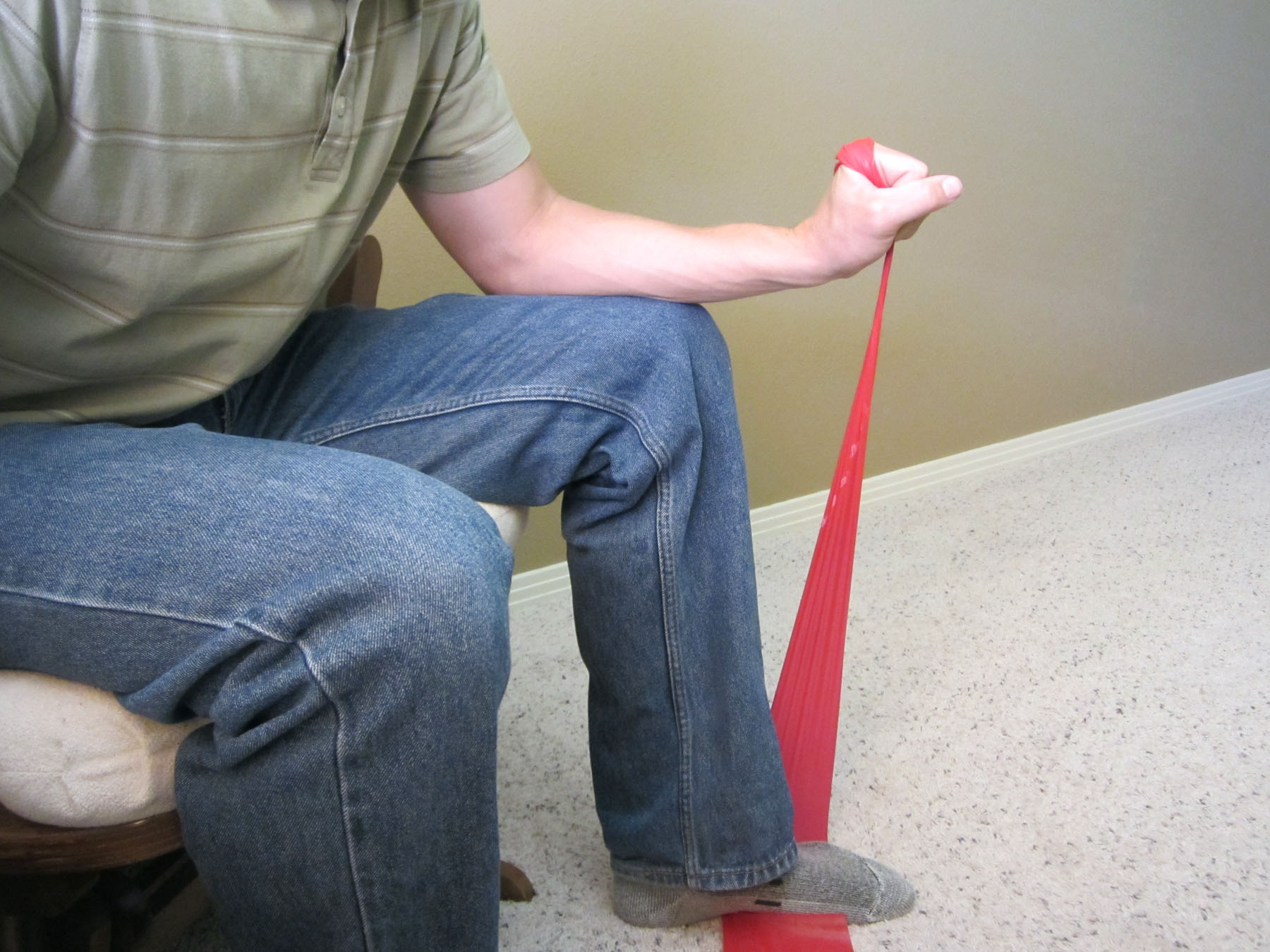
  1. Work on your Grip Strength. Practice bar hangs for time. Carry barbell plates (one in each hand) to challenge the grip strength. Don’t just work on wrist flexion or gripping exercises, but also work on wrist extension to improve grip strength and decrease your risk of lateral elbow pain. Use an exercise band (as shown below) to perform 2-3 sets of 20 repetitions. Extend the wrist up, and then slowly back down toward the floor. Be sure to move very slowly during the eccentric/muscle lengthening position (when your hand returns to the floor). IMG_5215_GripStrengthExercise_RGB
  2. Identify the Offending Movement. If you’re experiencing elbow pain, try to identify which specific movement aggravates the elbow. Once you identify the movement, work with your coach or athletic trainer to insure proper lifting technique.
  3. Work on your Mobility. CrossFit is not just about metabolic conditioning or strength training. You need to develop all aspects of your fitness, and this includes your flexibility. Work on upper body mobility by focusing on shoulder and thoracic mobility as well as lower body and spinal mobility. A free resource for shoulder and thoracic mobility is My Top 8 Stretches to Eliminate Neck, Upper Back, and Shoulder Pain which you can automatically download when you subscribe to my e-mail list. You will receive each week’s blog post sent directly to your e-mail making it even easier and more convenient!
  4. Warm Up. Prior to activity, be sure to perform a cardiovascular warm up to insure that the muscles are ready to stretch and perform high level activities. Perform a dynamic warm up by taking the associated muscle (or muscles) needed for the workout through the anticipated and needed range of motion (ROM) in a quick and brisk manner. A foam roller can also be utilized as part of your warm up. For more instruction, please refer to Foam Rolling for Rehabilitation and Does Foam Rolling Help or Hurt Performance?
  5. Static Stretch and Self-Mobilization Post Work Out. Continue to work on the immobile areas through static stretching and/or self-mobilization. Again, a foam roller can also assist. If you prefer a very comprehensive guide for improving mobility, I recommend Kelly Starrett’s Becoming a Supple Leopard.
  6. Be Proactive. Once you start to feel pain, be aggressive with your management and self-treatment. I like to use either a tennis ball or roll PVC pipe over the forearm area, which can be an effective treatment for lateral epicondylitis (“tennis elbow”). For more ideas on how to self-mobilize, please refer to My Top 3 Household Items for Self Mobilization.
  7. Contact your Physical Therapist. If the pain persists, seek additional help. Don’t let the pain linger. The longer it’s left untreated, the more potential for harm and damage which potentially could lead to a longer recovery. The American Physical Therapy Association (APTA) is an excellent resource for learning more about physical therapy as well as locating a physical therapist in your area.

Elbow pain can be debilitating by limiting your ability to exercise and perform daily tasks. Be proactive in your care and management.  Most importantly, don’t let the pain linger. You can find more tips and strategies on managing pain and injury by simply using the search function (located on the upper right-hand sidebar).

What specifically causes your elbow pain? Which treatments have you found to be the most effective?  Additional discussion can help others to manage his/her pain.  Please leave your comments below.

If you have a question that you would like featured in an upcoming blog post, please comment below or submit your question to contact@thePhysicalTherapyAdvisor.com. Be sure to join our growing community on Facebook by liking The Physical Therapy Advisor!