The Hidden Cause of Your Constant Neck & Upper Back Pain

Neck pain and upper back pain may be two of the most common ailments people experience. From struggling to move your neck, to worrying about the position you sit in on your favorite sofa, pain in the upper torso is debilitating. Yet, many of those who experience these kinds of issues haven’t suffered a fall, twisted their necks unnaturally, or been on rollercoasters since their pain started. For most people, the cause of neck pain or upper back discomfort can’t be pinpointed: there is no single unique moment in which their backs or necks could have been injured. What then? How did they come to be in so much pain? And if you’re reading this, you’re probably thinking the same thing about yourself. Fear not, however, because we’re here to help. In this post, we’ll be investigating the hidden causes that have led to your neck and upper back pain. We’ll also be looking at what to do about it and which steps to take next.

The really frustrating thing about constant neck and upper back pain is that, no matter what you seem to do, it just doesn’t want to disappear. You’ve tried everything: hot water bottles, massages, and even long periods of rest, yet nothing has changed, right? Well, the truth is, it isn’t going to get any better unless you find out exactly why you’re experiencing the pain. See, the thing is, neck and upper back pain often have pretty mundane sources: your everyday habits might be the culprits here. Thus, no matter what you do, if you don’t start there, nothing will change. In lieu of this, take a look at some of the fairly common mistakes people make.

Lack of Exercise

Now, I can hear you thinking from here… “I should be resting my muscles, not moving them!” Well, no, not really. By not moving enough, you are actually setting your recovery back considerably. Muscles and joints need to move in order to maintain mobility. If you aren’t moving your upper back and neck enough, your muscles will start to stiffen and shorten, thereby placing stress on your joints and decreasing overall movement. This invariably leads to the pain you’re experiencing now. So, while rest may intuitively feel like the right thing to do, it may actually be doing more harm than good. Why not try doing some gentle stretches to loosen up the painful area? Furthermore, if you sit at a desk for long periods of time, be mindful of getting up regularly and stretching your neck and upper back. Walk around a bit and, during your time off, take up a new sport like cycling, walking, or swimming.

Posture

Having bad posture is one of the leading causes of upper back and neck pain. Slouching leads to a variety of ailments in the long run, but a tell-tail sign of poor alignment is the nagging discomfort you come to experience in your upper torso. Start becoming mindful of how you sit and stand: make sure your spine is aligned correctly. If you’re sitting at a desk all day, make sure your chair supports your back correctly, and that your computer – if you use one – is at eye-level.

Everyday Habits: Strain on your Upper Back and Neck

You may not know this, but some of the things you do daily actually affect your upper back and neck considerably. Think about driving, for example. How long do you sit in the car for? And, when you drive, do you turn your neck or just blink into the rear-view mirror when necessary? These are the types of things you need to start considering when it comes to the health of your upper back and neck. How long do you stare at your phone for, and do you slouch while you do it? When you bend down to pick up the groceries, the school bags, or your pot plants, do you do it mindfully or without regard for your upper back and neck? What about when you clean the house, play golf, brush your teeth and hair, or shave your legs? All these daily decisions and actions accumulate over time, and the effect their incorrect execution may have is usually far too understated. Make a change today: be mindful and cognizant of how you do certain tasks, how often you do them, and whether you’re aware of what your body is trying to signal to you. The devil is in the details.

When it comes to tackling the issue of upper back and neck pain, as has been mentioned earlier, movement is your best friend. Move as much as you can and as often as you can. Be conscious of the fact, however, that you should always be sensitive to the type of activities you’re able to do. Some safe activities on your road to health include Pilates and yoga, both of which offer you the opportunity to enhance the flexibility and mobility of you upper back and neck muscles. You could also try walking, swimming, and relaxing hikes in order to jumpstart your journey to a pain free life.

In addition to the extra physical activities we suggest, physical therapy is by far the best, safest and most effective way of tackling and overcoming your upper back and neck pain. With the help of a professional, hands-on physical therapist, you’ll not only find the root cause of the problem, but your particular issue will be treated accordingly, thereby permanently relieving your pain. And not only that, a physical therapist with equip you with the tools to maintain your pain free life by giving you tailor-made stretches and exercise routines suited to you personally. Physical therapy will mobilize your joints, relieve stiffness, and rid you of your pain so that you can enjoy the life you deserve.

To learn more about physical therapists or find one in your area, visit the American Physical Therapy Association (APTA).

If you have a question that you would like featured in an upcoming blog post, please comment below or submit your question to contact@thePhysicalTherapyAdvisor.com.  In case you haven’t already, be sure to subscribe to my e-mail list and YouTube channel as well as join our community on Facebook by liking The Physical Therapy Advisor!
How to Properly Perform I’s, T’s, and Y’s Exercises

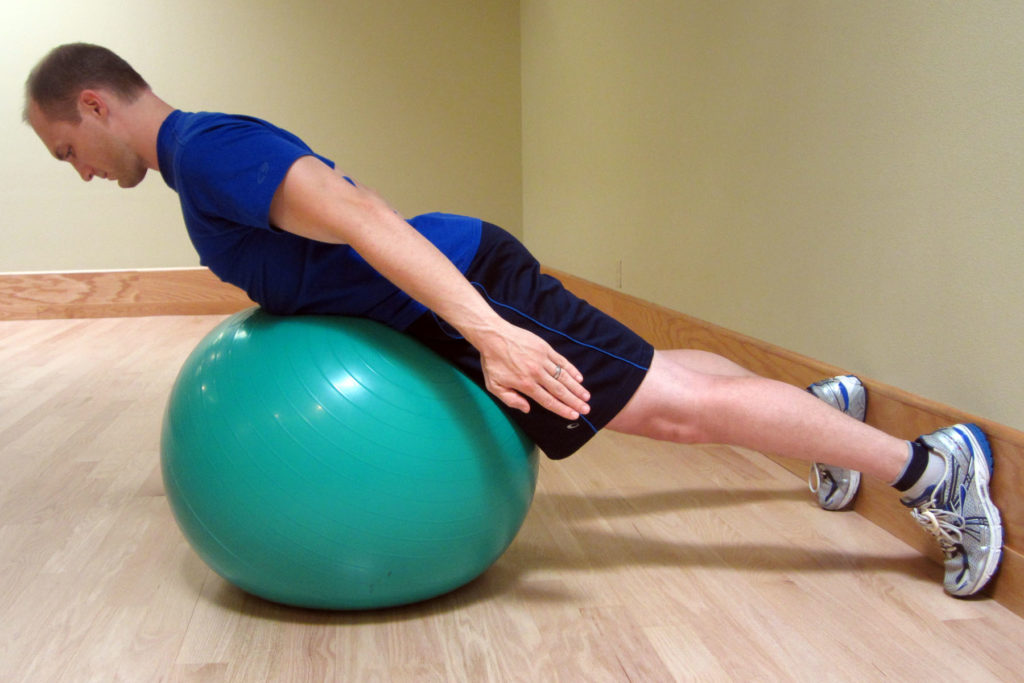
The purpose of I’s, T’s, and Y’s exercises on an exercise ball is to address lower and mid trapezius and scapula muscle weakness and to generally activate the posterior chain (including the lumbar spine extensors).  Poor posture due to poor thoracic mobility and poor scapular muscle strength are often major contributors to neck, shoulder, and upper back pain.  Poor lumbar extensor strength is linked to low back pain.

I’s, T’s, and Y’s exercises on an exercise ball can be helpful in treating the following: 

  • Poor posture
  • Shoulder pain
  • Cervical pain
  • Headaches
  • Thoracic pain
  • Upper and lower back pain

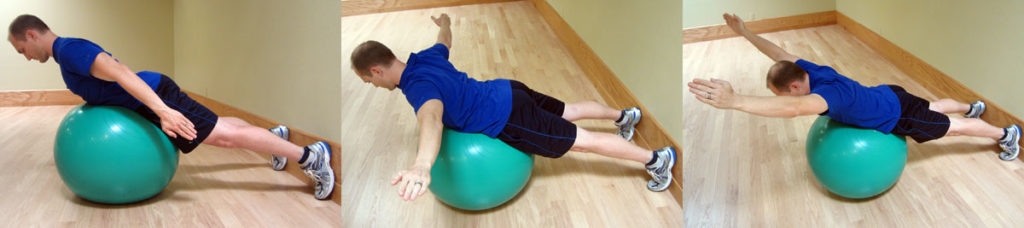
Begin by performing the I’s, T’s, and Y’s exercises on a Thera-Band Exercise Ball.  Please refer to I’s, T’s, and Y’s Exercises for step-by-step instructions.  Start slowly without resistance.  Keep your chin tucked and head aligned with the body.

Version One:  Move your arms slowly up and down in each position of I, T, and Y.

Version Two:  Hold each position for the specified time.

To increase the difficulty for either version, add a 1-3 pound weight in each hand.  These exercises shouldn’t cause any pain in your neck, shoulder or upper/lower back. 

When this exercise is performed correctly, it engages and strengthens many critical muscles that help control many of our most common postures and movement patterns.  A slouched posture with a forward head and rounded shoulders can be associated with many common pain syndromes including:  neck pain and headaches; upper back pain; and shoulder pain.

It’s important to try to keep the proper postural alignment with your shoulders under your ears, and the shoulder blades set in a back and down position.  This is particularly important when performing any activity while using the shoulder.  This series of exercises can help to strengthen the important muscles that can help you maintain proper postural alignment.

Be sure to check out my video post, How to Use an Exercise Ball to Improve Posture and Treat Shoulder, Neck, and Back Pain, in which I demonstrate how to perform I’s, T’s, and Y’s exercises on an exercise ball in order to address lower and mid trapezius and scapula muscle weakness.

When performing these exercises, it is important to understand that they should never be painful.  You may feel a mild to moderate discomfort because the exercises are difficult, but if you are experiencing pain (particularly, the pain you are trying to treat) please discontinue the exercise and speak to your physical therapist.

Have you tried the I’s, T’s, and Y’s exercises on an exercise ball before?  If so, what has your experience been like?  Please leave your comments below.

If you have a question that you would like featured in an upcoming blog post, please comment below or submit your question to contact@thePhysicalTherapyAdvisor.com.  Be sure to join our growing community on Facebook by liking The Physical Therapy Advisor!

How to Use an Exercise Ball to Improve Posture and Treat Shoulder, Neck, and Back Pain

In this video, I demonstrate how to perform I’s, T’s, and Y’s exercises on an exercise ball in order to address lower and mid trapezius and scapula muscle weakness.  Poor posture (due to poor thoracic mobility) and poor scapular muscle strength are often major contributors to neck, shoulder, and upper back pain.

I’s, T’s, and Y’s exercises on an exercise ball can be helpful in treating the following:

  • Poor posture
  • Shoulder pain
  • Cervical pain
  • Headaches
  • Thoracic pain
  • Upper and lower back pain

Begin by performing these I’s, T’s, and Y’s exercises on a Thera-Band Exercise Ball.  Start slowly without resistance.  Keep your chin tucked and head aligned with the body.  Move your arms slowly up and down in each position of I, T, and Y.

For an advanced version, add a 1-2 pound weight in each hand.  To make it even more challenging, hold for time.  These exercises shouldn’t cause any pain in your neck, shoulder, or upper/lower back.

When this exercise is performed correctly, it engages and strengthens many critical muscles that help control many of our most common postures and movement patterns.  A slouched posture with a forward head and rounded shoulders can be associated with many common pain syndromes including: headaches; cervical pain, upper back pain; and shoulder pain.

It’s important to try to keep the proper postural alignment with your shoulders under your ears, and the shoulder blades set in a back and down position.  This is particularly important when performing any activity while using the shoulder.  This series of exercises can help to strengthen the important muscles that can help you maintain proper postural alignment.

In addition to muscle weakness leading to common aches and pains, poor mobility in the thoracic spine is also a common contributing factor in the pain syndromes mentioned above.  If you want to learn how to stretch and self-mobilize the thoracic spine, be sure to check out My Top 8 Stretches to Eliminate Neck, Upper Back, and Shoulder Pain.  By subscribing to my e-mail list, you will automatically gain access to this FREE resource.  Download the .pdf file, which is full of photos and exercise instructions, to get started!

If you continue to experience pain, seek additional help.  Don’t let the pain linger.  The longer a condition is left untreated, the more potential for harm and damage which potentially could lead to a longer recovery.  The American Physical Therapy Association (APTA) is an excellent resource for learning more about physical therapy as well as locating a physical therapist in your area.

Do you have a favorite “go to exercise” that you use to treat neck, shoulder, and upper back pain?  Please leave your comments below.

If you have a question that you would like featured in an upcoming blog post, please comment below or submit your question to contact@thePhysicalTherapyAdvisor.com. Be sure to join our growing community on Facebook by liking The Physical Therapy Advisor!
Why Your Upper Back Hurts When You Run

WhyYourUpperBackHurtsWhenYouRun

http://running.competitor.com/2016/06/injury-prevention/upper-back-hurts-run_151708

Competitor

June 13, 2016

As featured in this post for Competitor, I explain how poor technique or weak back muscles can contribute to upper back pain while running.  You’ll learn why it’s important to get your body to do the opposite of hunching forward and to stretch out the neck and upper back muscles in order to eliminate pain when running.  I also recommend a series of exercises to strengthen the lower and mid trapezius muscles, and the rhomboid muscles, along the spine at the base of the neck.

At the end of a long hard run, you expect your legs and lungs to be burning, but your upper back? No way.

Unfortunately, “it’s a very common thing,” said Nick Studholme, a sports chiropractor in Colorado.  As the intensity and length of a run increases, many runners will often experience a worsening sharp pain in their upper back, in between or under the shoulder blades.  It’s not quite debilitating, but it sure is painful and annoying.

It’s particularly common in novice runners, said physical therapist Ben Shatto, but it can happen to anyone with poor technique or weak back muscles.  And that’s most of us.  Continue Reading

How to Avoid Upper Back Pain when Running

MTA_UpperBackPain

http://marathontrainingacademy.com/upper-back-pain

Marathon Training Academy

January 24, 2016

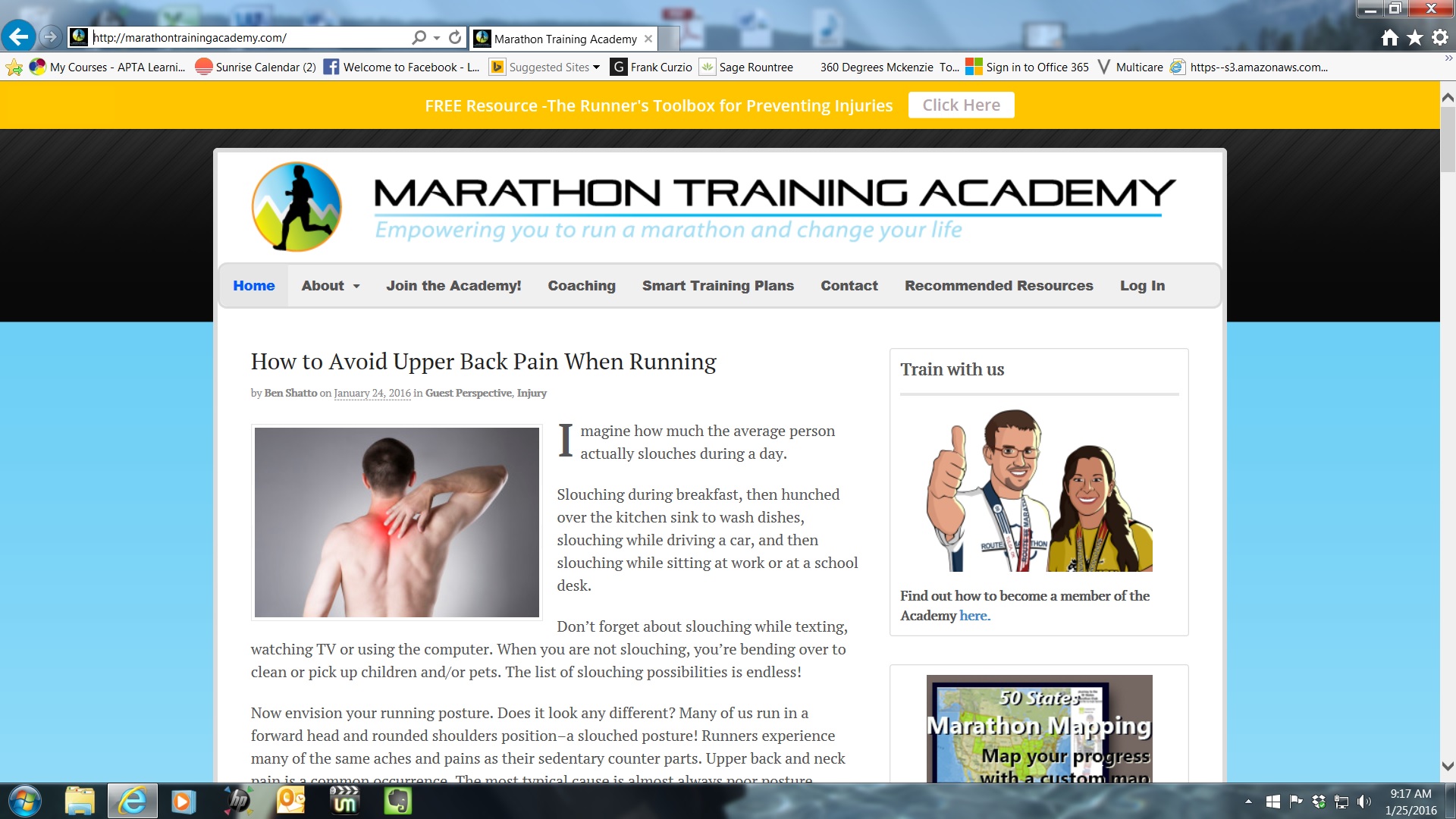
In this guest post for Marathon Training Academy, you will learn how to improve your posture and thoracic (upper back) mobility while strengthening your upper back postural muscles in order to eliminate pain when running.

Young woman out jogging suffers a muscle injuryImagine how much the average person actually slouches during a day. Slouching during breakfast, then hunched over the kitchen sink to wash dishes, slouching while driving a car, and then slouching while sitting at work or at a school desk. Don’t forget about slouching while texting, watching TV or using the computer. When you are not slouching, you’re bending over to clean or pick up children and/or pets. The list of slouching possibilities is endless!

Now envision your running posture. Does it look any different? Many of us run in a forward head and rounded shoulders position–a slouched posture! Runners experience many of the same aches and pains as their sedentary counter parts. Upper back and neck pain is a common occurrence. The most typical cause is almost always poor posture.  Continue Reading