How to Prevent Back Pain while Working from Home

The COVID-19 pandemic has transformed work and how it is done. Many people transitioned from working in an office setting into working remotely from home. Many employers have extended work-from-home (WFH) options as coronavirus cases continue to surge. With the shift of working environments, there has been a rise in back pain and other posture and structural driven pain from the neck, shoulders, arms, and low back. Much of this increase in pain is due to poor home working conditions and more sedentary behavior as we spend more time at home during the COVID-19 pandemic.

Low back pain (LBP) continues to affect nearly 80% of the U.S. population at one time or another, and it’s one of the top reasons for physician visits. Yet most of us do not currently seek care or in some cases, we cannot even get appointments into our medical providers because of the pandemic.

Fortunately, most LBP is mechanical–meaning it’s from a physical or structural cause not related to conditions such as cancer or infections. The problem with this type of LBP is that it usually comes back. People who have had an episode of mechanical LBP are 90% more likely to experience it again. It’s best to minimize your risk factors for experiencing LBP by being pro-active. This means that you can effectively self-treat YOUR low back pain without expensive medical visits, surgery, pills or injections.

How to Prevent Back Pain while Working from Home:

Fidget more. Limit the amount of sitting that you spend at one time. Since you’re at home, you can sit in different positions and in different locations. Get out of a sitting position every hour, and ideally, walk. If you aren’t able to walk, then try to shift your position at least once every twenty minutes.

Frequent position changes can help to avoid LBP. Don’t get stuck sitting for hours in the same position (particularly, if it’s uncomfortable or if you’re sitting with poor posture or with poor ergonomics). If you’re standing, then stand in different positions. Put your foot up on a stool, and then switch feet. Stand on different surfaces when possible (hardwood, carpet or softer padding like a standing mat). Variety is the key to avoiding low back pain.

Sit with good posture. If you’re going to sit for any period of time (regardless of the position), maintain your posture. Whenever possible, make sure that your knees stay below your hip level and that you are able to maintain your natural lumbar curve. Even if you don’t have an office chair at home, lean back in the chair (don’t slouch in your lower back). A great tool to help you with this is a lumbar roll. Ergonomics are important, so find ways to support your back while keeping your shoulders and neck in a relaxed position.

Stop looking down. Try to keep your devices at eye level, or slightly down. Don’t position them so that you have to look up at them. Limit the amount of time spent looking down whether that is from texting or reading a paper or even writing. If you tend to spend 30-40 minutes at a time looking down at your device, work toward reducing that time in half.

Stand more. A standing desk can be a wonderful luxury. At home, you can get creative and use a higher counter top for a make shift standing desk. Use boxes or books to improve the ergonomic positioning. The set up should allow you to look straight ahead when you work on your computer while in a position that your arms can hang down naturally with the forearms supported. No one can see your set up. Even if it’s not esthetically pleasing, it’s best to keep your body feeling good.

Take a break to exercise. Take advantage of being home and take a 15 minute stretching or yoga break. How about 10 minutes to roll out and utilize the foam roller or maybe a few core exercises like planks? Have some fun with it. My favorite 10 minute work-from-home exercise break includes: 25 air squats, 25 push-ups, 5 minutes stretching on the foam roller, and then a few press-ups.

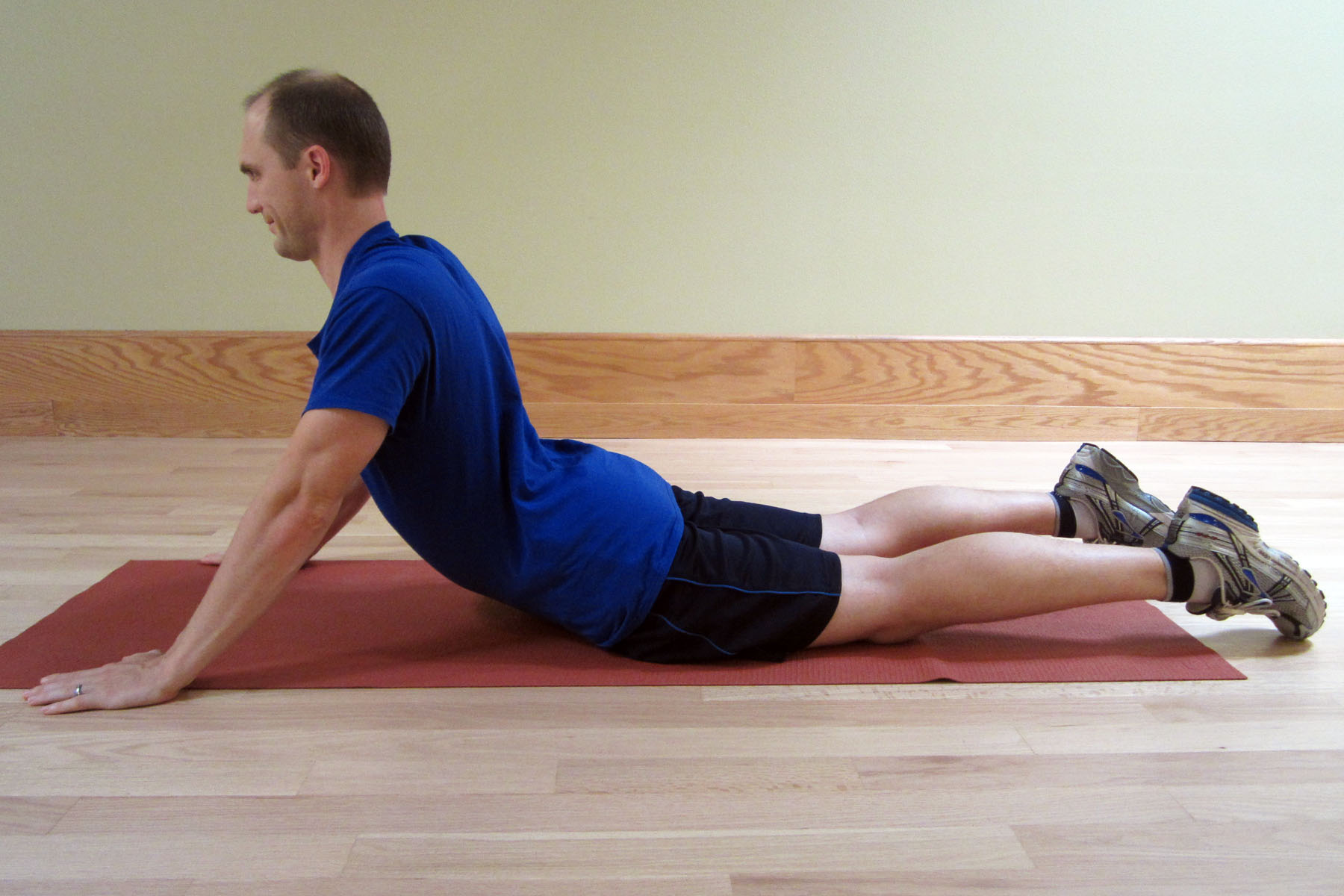
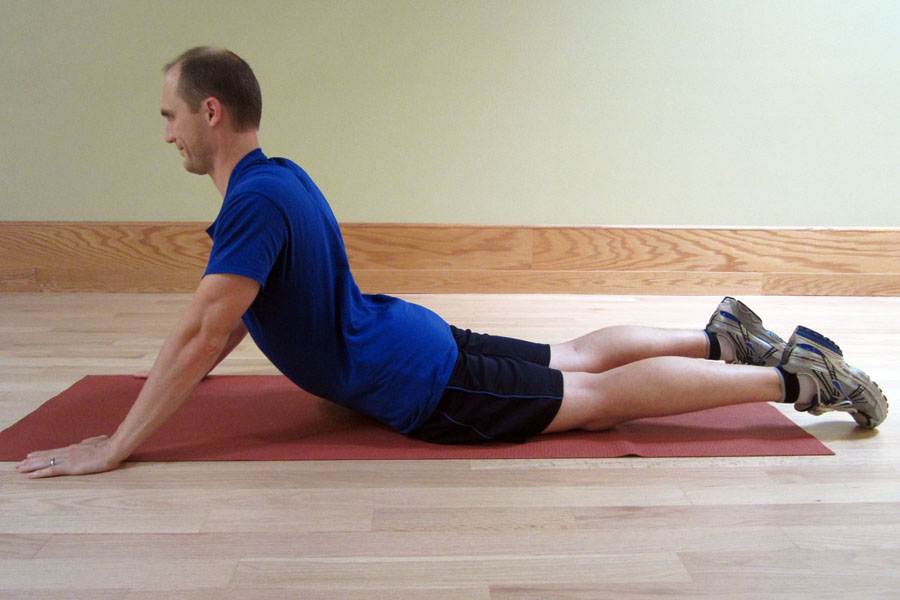
I highly recommend press-ups. Lie on your stomach and perform 10 to 20 press-ups. Go slow and easy, but work your way up to full motion. Perform these multiple times a day as time allows. This is much easier to do when working from home versus an office environment.
Developing adequate strength in the lumbar extensor muscles and core musculature is the primary way to prevent initial episodes and to prevent reoccurring episodes of LBP.  Research clearly indicates that the right targeted exercises are the most effective way to manage LBP.

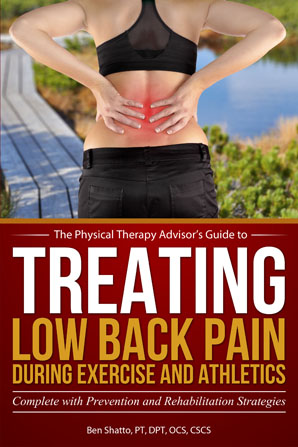
If you’re not sure how to effectively and safely exercise your back or if you’re already experiencing low back pain, be sure to check out my Treating Low Back Pain (LBP) during Exercise and Athletics Book and Video Package.

For the approximate price of just one co-pay to see a doctor, you will receive my easy to read book with step-by-step instructions and a complete video package designed to help you prevent and self-treat reoccurring low back pain episodes.

Want to peek inside the video content? Watch now as I describe what really the “core” is and why it matters.

WATCH NOW

If you have a question that you would like featured in an upcoming video or blog post, please comment below or submit your question to contact@thePhysicalTherapyAdvisor.com.  In case you haven’t already, be sure to subscribe to my e-mail list and YouTube channel as well as join our community on Facebook by liking The Physical Therapy Advisor!
5 Tips to Prevent Low Back Pain When Shoveling Snow

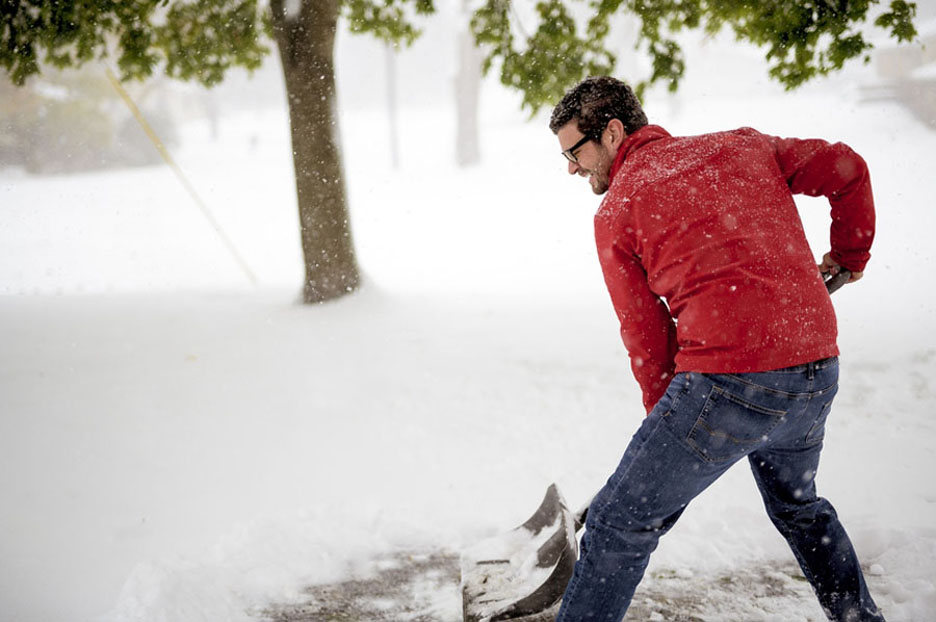
In many parts of the world, snow season is upon us. Whether you are shoveling snow or using a mechanical snow blower, your risk of experiencing back pain is likely higher than any other time of the year. If you’re one of the lucky ones who live in a warmer climate, these tips can be just as helpful as you manage those DIY (Do It Yourself) projects.

Whether you’re shoveling snow, working on an outside landscaping project, moving furniture around or just deep cleaning, you’re likely to be exercising different muscles and performing activities that you aren’t used to. Your best laid plans can be derailed by a bad episode of low back pain (LBP). Don’t worry, you can prevent this! If it’s a little too late and you’re already experiencing LBP, I can guide you forward without expensive medical bills, pills, injections or surgeries.

Fortunately, most LBP is mechanical–meaning it’s from a physical or structural cause that is not related to conditions such as cancer or infections. The problem with this type of LBP is that it usually comes back. People who have had an episode of mechanical LBP are 90% more likely to experience it again.

If you’re going to be shoveling that snow or tackling those DIY projects and desire to still be standing upright at the end of the day, it’s best to minimize your risk factors for experiencing LBP by being proactive.

5 Tips to Prevent Low Back Pain When Shoveling Snow:

  1. Warm up.

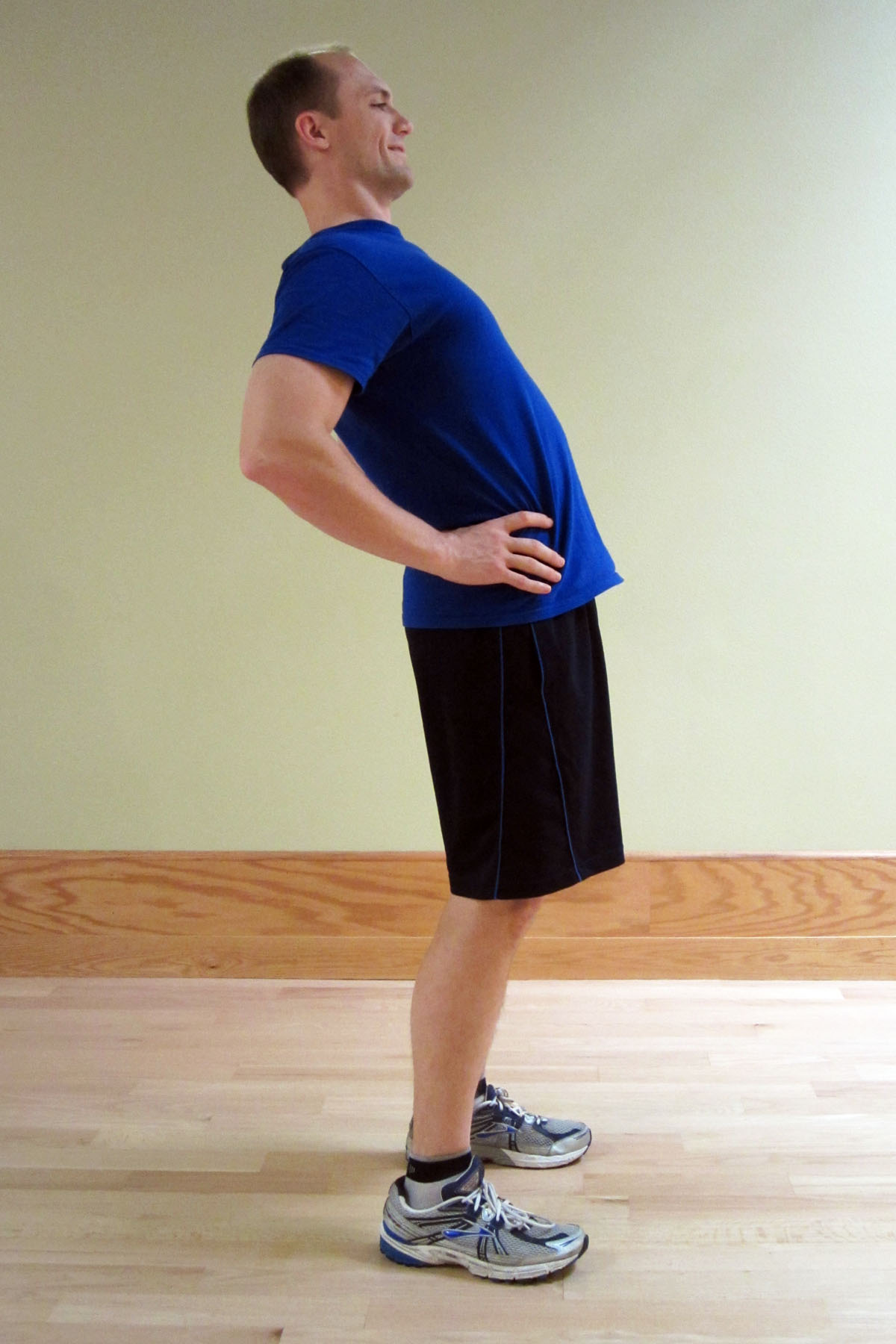
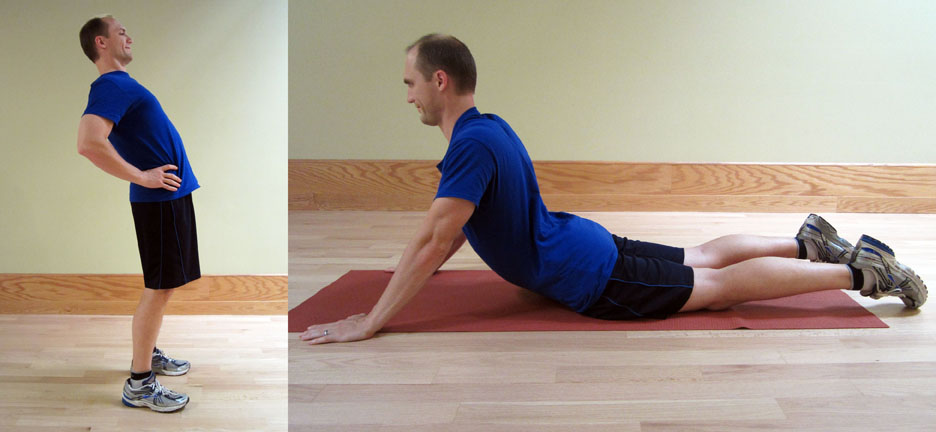
Just like any other exercise and/or event, you should warm up first. Pre-activity:  A good place to start is to perform standing back extensions and press-ups. This exercise can also very helpful if you are already experiencing low back pain.

  1. Loosen up.

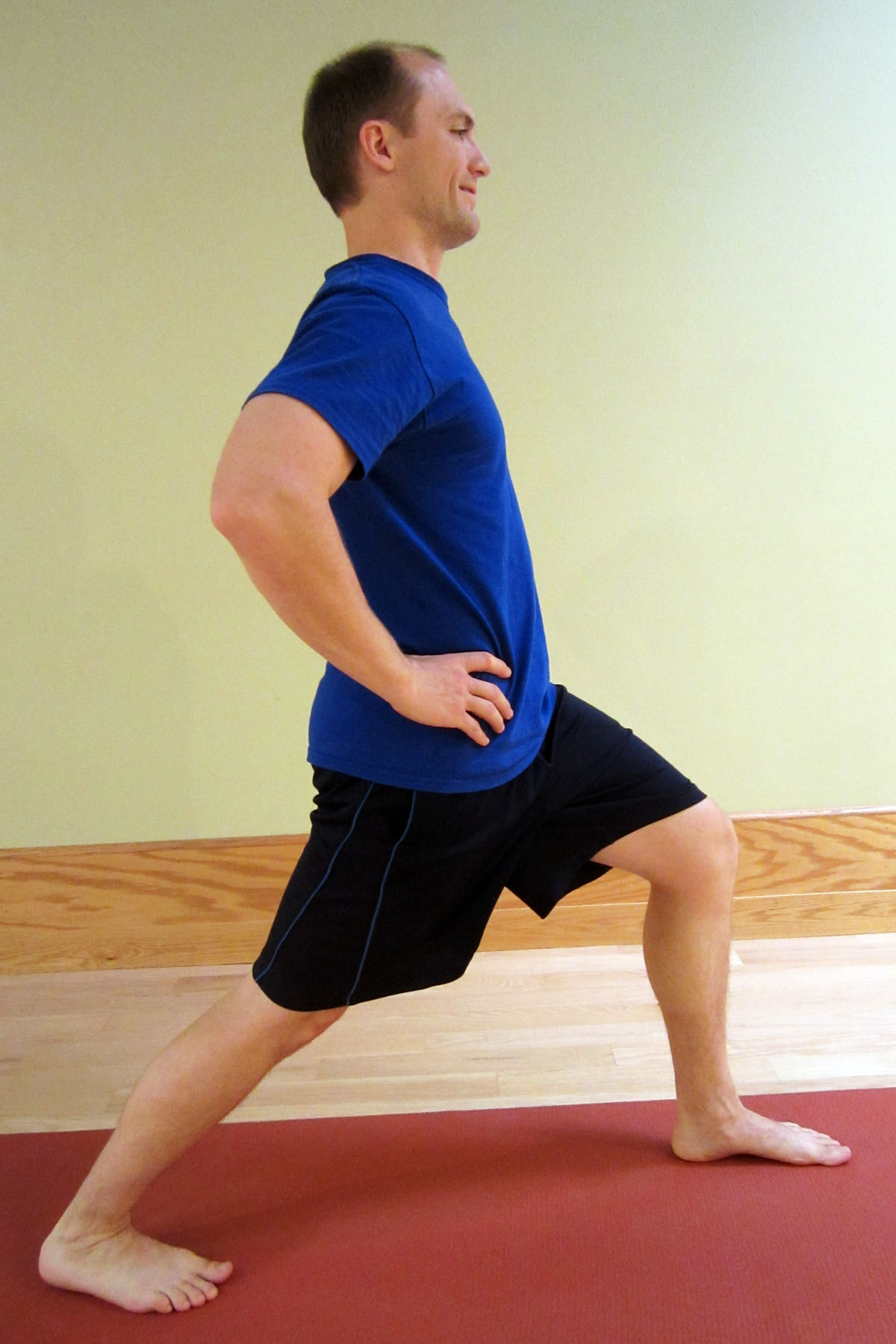
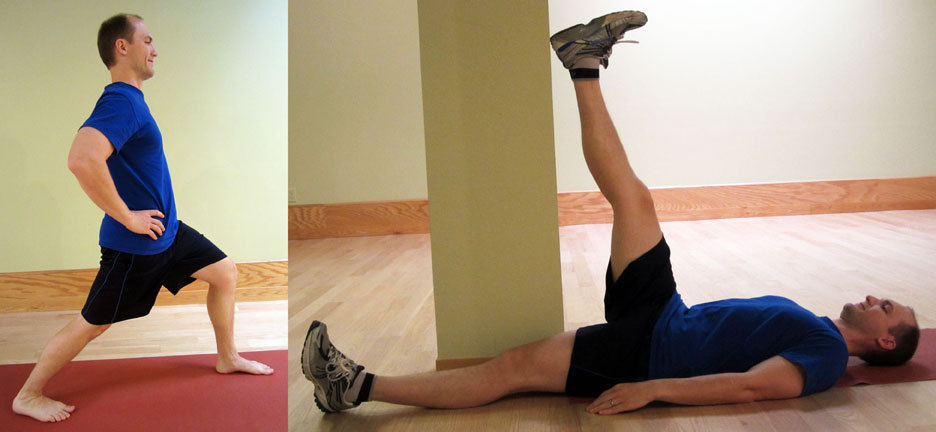
So many of us sit too much! This causes tightness in the hip flexors and hamstrings. Try stretching your hip flexors and hamstrings.

  1. Limit the amount of time spent in one position.

This means to limit the amount of time slouched over the shovel or snow blower. Don’t sit or bend over for a prolonged period of time without at least standing up straight (and preferably, performing additional standing back extensions and press-ups as well as stretching your hip flexors and hamstrings). TAKE A STANDING REST BREAK TO STRAIGHTEN BACK UP.

  1. Use common sense.

If you don’t think you can comfortably lift something, be sure to ask someone for help. If your back is starting to get sore from all that hard work, TAKE A BREAK, but don’t immediately go sit down in a slouched posture. Sitting (especially with poor posture) after working your back really hard is a major risk factor for developing low back pain.

Be sure to work within your limits, and don’t overestimate those limits! Just because you could lift 100 lbs. in high school doesn’t mean that you still can. Always use common sense and proper technique when lifting a heavy object or when performing repetitive lifting and shoveling.

After taking a prolonged rest, be sure to spend a few minutes warming up and loosening up again. Don’t make the mistake of sitting down and resting during your lunch break, only to launch back into the project without making sure that your back is ready. Take the extra time to be certain that your back is ready to start working again.

  1. Preventing LBP is always best.

Once you have experienced an episode of LBP, you have a 90% chance of it reoccurring. Be proactive! Reoccurrence rates can be impacted and reduced!

Developing adequate strength in the lumbar extensor muscles and core musculature is the primary way to prevent initial episodes and to prevent reoccurring episodes of LBP. Research clearly indicates that the right targeted exercises are the most effective way to manage LBP.

If you’re not sure how to effectively and safely exercise your back or if you’re already experiencing low back pain, I have the solution for you. For the approximate price of just one co-pay to see a doctor, you will receive my easy to read book with step-by-step instructions and a complete video package designed to help you prevent and self-treat reoccurring low back pain episodes. 

The Treating Low Back Pain (LBP) during Exercise and Athletics Book and Video Package includes:

Treating Low Back Pain during Exercise and Athletics eBook

In this eBook, you’ll learn why it is critically important to prevent the first episode of low back pain. LBP has reoccurrence rates as high as 90%. If you have already experienced an episode of LBP, you’ll learn why exercise is an important component to long term management. Most importantly, you will understand how to avoid pain and injury in order to take your training to the next level. Topics include:

  • Specific strategies for LBP prevention.
  • How to address specific causes of LBP.
  • Best practices on how to prevent and self-treat when you experience an episode of LBP.
  • A step-by-step LBP rehabilitation guide complete with photos and detailed exercise descriptions.
  • How to implement prevention and rehabilitation strategies.

 7-part Series of Instructional Videos

Nearly 60 minutes of actionable advice to prevent and treat LBP as it relates to active individuals, sports, and athletics. An in-depth look at treating LBP with a 7-part series of instructional videos in which I address the following:

  • Potential Risk Factors for Lower Back Pain
  • What are the Core Muscles?
  • Prevention during Exercise (Part 1 and 2)
  • Initial Treatment
  • Further Treatment and Taping
  • Long Term Management Strategies and Final Recap

LEARN MORE HERE

If you have a question that you would like featured in an upcoming video or blog post, please comment below or submit your question to contact@thePhysicalTherapyAdvisor.com. In case you haven’t already, be sure to subscribe to my e-mail list and YouTube channel as well as join our community on Facebook by liking The Physical Therapy Advisor!
A Core Stability Exercise that Anyone Can Do

Proper core and lumbar extensor strength is the key to preventing an episode of low back pain (LBP) as well as an important component to treating LBP. Low back pain is estimated to affect nearly 80% of the U.S. population at one time or another. In general, most of us don’t spend enough time properly strengthening our core muscles. In this video post, you will learn how to engage your abdominal muscles with a simple ball exercise that I recommend to all of my patients initially in my LBP rehabilitation program.

The core muscles are part of the body’s natural method of stabilizing the spine. The core muscles, along with intra-abdominal pressure, help to form the round cylinder that is utilized to support the spine. Ligaments and boney articulations are also important in spinal stabilization. Most people don’t realize that the core actually consists of two separate groups of muscles, the inner and outer core muscles, and neither group involve the rectus femoris muscles (the six pack).

The Multifidus Muscles

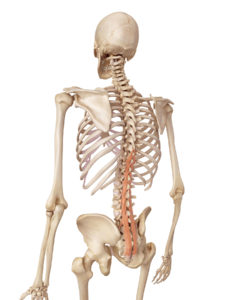
  • The inner core consists of the muscles of the pelvic floor, the transversus abdominis (TVA), diaphragm, and the multifidus muscles (which span the vertebrae along the back side of the spine as shown above). The TVA wraps all the way around the stomach and attaches to the spine. This is what helps to form the cylinder. When contracted (in conjunction with the pelvic floor and diaphragm), it helps to increase the intra-abdominal pressure to support the spine.
  • The other muscles that help to support the spine are known as the outer core muscles. These muscles are responsible for movement of the trunk and spine as well as aiding in stability. The inner core muscles do not actually produce any trunk or spine movement. The outer core muscles consists of the following muscles:  lumbar paraspinal muscles; the quadratus lumborm; the internal and external obliques; and the psoas major and minor (hip flexors). Some may also include the glutes (buttocks muscles), hamstrings, and quadriceps as part of the outer core muscles.

Those working on core strength may not be performing the correct exercises. Performing proper core exercises (and particularly, lumbar stabilization exercises) are the primary treatment modality for LBP.

In this video, I demonstrate an easy and effective way to actively engage the inner core abdominal muscles. This exercise is typically safe even early on during the rehabilitation process for low back pain. 

For more information on how to effectively exercise and work the core muscles in order to prevent or treat LBP, be sure to check out my book, Treating Low Back Pain during Exercise and Athletics. You will learn how to address specific causes of LBP as well as the best practices on how to prevent and self-treat when you experience an episode of LBP. In this step-by-step LBP rehabilitation guide (complete with photos and detailed exercise descriptions), you will discover how to implement prevention and rehabilitation strategies to eliminate pain and get back to training and exercise sooner.

AVAILABLE NOW ON AMAZON!

In addition, check out this sample video, Segment 2: What are the Core Muscles?, taken from my Treating Low Back Pain (LBP) during Exercise and Athletics Video Package which you can purchase HERE.

If you have a question that you would like featured in an upcoming blog post, please comment below or submit your question to contact@thePhysicalTherapyAdvisor.com. In case you haven’t already, be sure to subscribe to my e-mail list and YouTube channel as well as join our community on Facebook by liking The Physical Therapy Advisor!
5 Tips to Prevent Low Back Pain during DIY Projects

Many of us will be planning our yearly DIY (Do It Yourself) projects now that it’s nearly summer time (in the U.S.).  I have a few minor landscaping projects that will be addressed this summer, too.  Whether it is an outside landscaping project, an indoor painting project, moving furniture around, and spring cleaning (don’t forget the garage!), you are likely to be exercising different muscles and performing activities that you aren’t used to.  It’s easy to imagine the new paint color or a beautiful landscape design.  Now imagine crawling around on the floor because you can’t stand up as your best laid plans are derailed by a bad episode of low back pain (LBP).  Not exactly the picture you were hoping for!

Exhausting work in garden

Whether you are an avid exercise enthusiast, runner, CrossFitter, weekend warrior or couch potato, you are likely to experience an episode of LBP despite being young or old.  LBP is estimated to affect nearly 80% of the U.S. population at one time or another, and it’s one of the top reasons for physician visits.  Fortunately, most LBP is mechanical–meaning it’s from a physical or structural cause not related to conditions such as cancer or infections.  The problem with this type of LBP is that it usually comes back.  People who have had an episode of mechanical LBP are 90% more likely to experience it again.

If you are going to be tackling those DIY projects and desire to still be standing upright at the end of the day, it’s best to minimize your risk factors for experiencing LBP by being proactive!

5 Tips to Prevent Low Back Pain during DIY Projects:

1. Warm up.

Just like any other exercise and/or event, you should warm up first.  A good place to start is to perform standing back extensions and press-ups.

StandingBackExtensions_PressUps

2. Loosen up.

So many of us sit too much!  This causes tightness in the hip flexors and hamstrings.  Try stretching your hip flexors and hamstrings.

HipFlexors_Hamstrings

3. Limit the amount of time spent in one position (including sitting).

Don’t sit or bend over for a prolonged period of time without at least standing up straight (and preferably, performing additional standing back extensions and press-ups as well as stretching your hip flexors and hamstrings).

If you are sitting, maintain proper posture.  Whenever possible, make sure that your knees stay below your hip level and that you are able to maintain your natural lumbar curve.  A great tool to help you with this is a lumbar roll.

4. Use common sense.

If you don’t think you can comfortably lift something, be sure to ask someone for help.  Stay within your limits, and don’t over estimate those limits!  Just because you could lift 100 lbs. in high school, it doesn’t mean that you still can.  Use common sense and proper technique when lifting a heavy object or when performing repetitive lifting.

After taking a prolonged rest, be sure to spend a few minutes warming up and loosening up again.  Don’t make the mistake of sitting down and resting during your lunch break, only to launch back into the project without making sure that your back is ready.  Take the extra time to be certain that your back is ready to start working again.

5. Preventing LBP is always best.

Once you have experienced an episode of LBP, you have a 90% chance of it reoccurring.  Be proactive!  Reoccurrence rates can be impacted and reduced!

Developing adequate strength in the lumbar extensor muscles and core musculature is the primary way to prevent initial episodes and to prevent reoccurring episodes of LBP.  Research clearly indicates that the right targeted exercises are the most effective way to manage LBP.

Stay tuned in during this upcoming month as I introduce you to my new complete self-treatment package, Treating Low Back Pain during Exercise and Athletics.  I have designed a complete guide and system to help runners, CrossFitters, exercise enthusiasts, and weekend warriors just like you (and me) prevent, treat, and manage LBP so that you don’t have to waste any training days because of ineffective treatment measures.  In the meantime, be sure to check out my FREE resource, 10 Minutes per Day Low Back Pain Prevention Guide.  Download the .pdf file, which is full of photos and exercise instructions, to get started!

For additional information on LBP, please refer to the following:

Which DIY (Do It Yourself) project do you hope to accomplish this upcoming summer?  Please share below.

Be sure to join our growing community on Facebook by liking The Physical Therapy Advisor!  If you have a question that you would like featured in an upcoming blog post, please e-mail contact@thephysicaltherapyadvisor.com.
Disclaimer:  The Physical Therapy Advisor blog is for general informational purposes only and does not constitute the practice of medicine or other professional health care services, including the giving of medical advice. No health care provider/patient relationship is formed.  The use of information on this blog or materials linked from this blog is at your own risk.  The content of this blog is not intended to be a substitute for professional medical advice, diagnosis, or treatment.  Do not disregard, or delay in obtaining, medical advice for any medical condition you may have.  Please seek the assistance of your health care professionals for any such conditions.

My Top 7 Tips to Prevent Low Back Pain While Traveling

This time of year, many of us plan to hit the road (or the sky) to visit family and/or friends or to get away for some rest and relaxation!  Now imagine crawling around on the floor because you can’t stand up as your best laid plans are derailed by a bad episode of low back pain (LBP).  Why the pain while vacationing?  Sitting is a major contributing factor to low back pain.  Combine sitting followed by bending and twisting as you load and unload heavy bags—you’re setting yourself up for a miserable time!

Low back pain (LBP) is estimated to affect nearly 80% of the U.S. population at one time or another, and it is one of the top reasons for physician visits.  Fortunately, most LBP is mechanical–meaning it is from a physical or structural cause not related to conditions such as cancer or infections.  The problem with this type of LBP is that it usually comes back.  People who have had an episode of mechanical LBP are 90% more likely to experience it again.  It’s best to minimize your risk factors for experiencing LBP by being pro-active.

My Top 7 Tips to Prevent Low Back Pain While Traveling include:

  • If you smoke, stop. Smoking is one of the top risk factors in LBP. Even cutting back can decrease your risk.
  • Limit the amount of sitting that you spend at one time. Get out of a sitting position every hour, and ideally, walk. If you aren’t able to walk, then try to shift your position at least once every twenty minutes. Frequent position changes can help to avoid LBP.
  • Sit with good posture. Whenever possible, make sure your knees stay below your hip level and that you are able to maintain your natural lumbar curve. A great tool to help you with this is a lumbar roll.
  • Standing Back Extensions: After sitting, stand up, and perform standing back extensions. I encourage performing at least 10 repetitions each time you stand.

IMG_3843_RGB_4x6

  • Stretch Your Hip Flexors: After performing standing back extensions, it’s time to stretch your hip flexors. The hip flexors tend to tighten up during prolonged sitting. When they spasm, it can cause LBP because they attach directly to the spine. Stand with a good upright posture, with your feet straight ahead, and bend your front knee until you feel the opposite hip flexor stretch. Hold for 30 seconds, and then repeat two to three times on each side.

IMG_3934_RGB_4x6

  • Press-ups: Lie on your stomach and perform 10 to 20 press-ups before you leave from home, when convenient and safe during your travels, and when you arrive at your destination. Go slow and easy, but work your way up to full motion. I encourage performing this multiple times a day as time allows.

IMG_3832_RGB_6x4

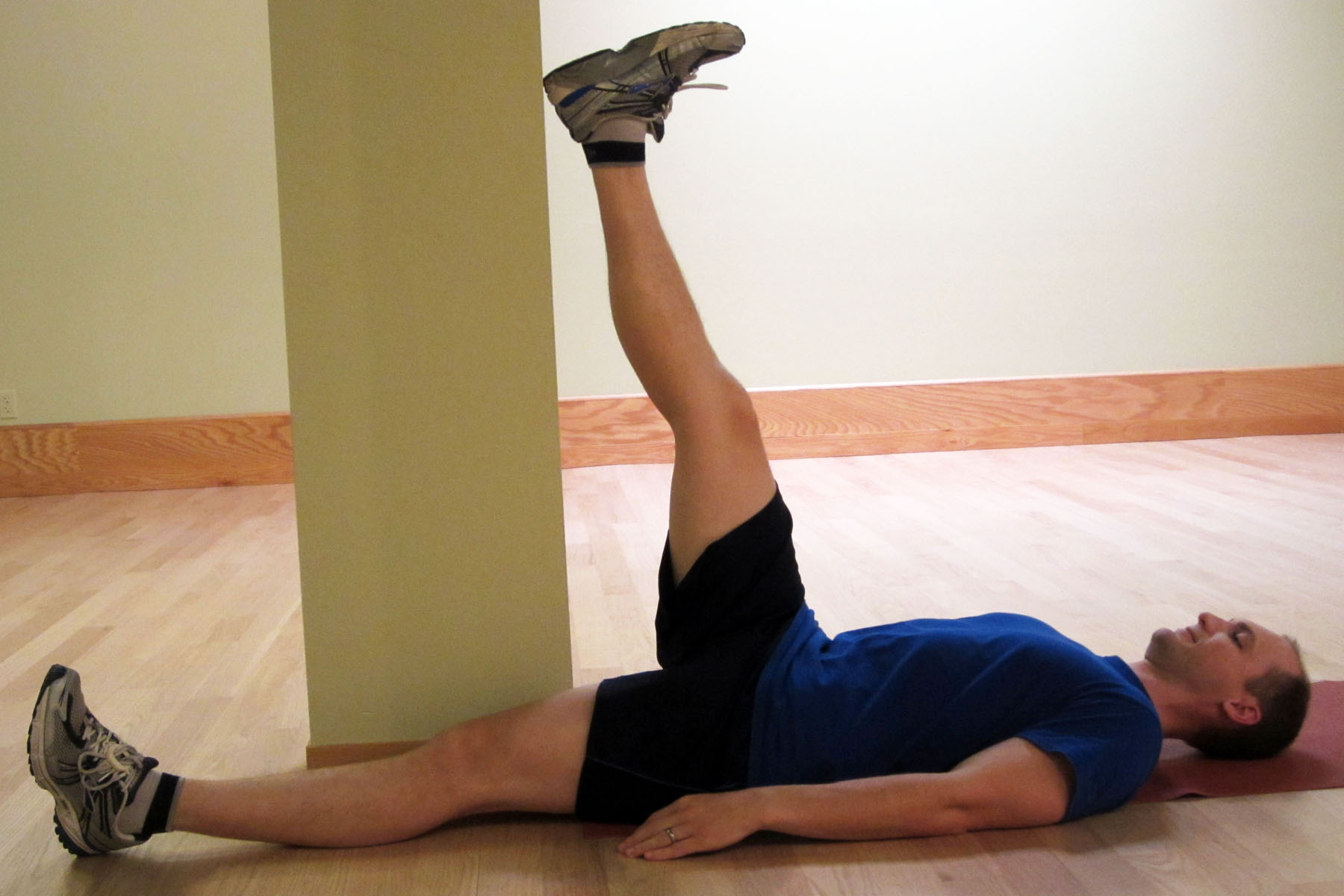
  • Stretch Your Hamstrings: Find a doorway and stretch your hamstrings before you leave from home, when convenient and safe during your travels, and when you arrive at your destination. I recommend at least one minute per side and preferably two repetitions per side.

IMG_3844_RGB_6x4

My final tip to manage low back pain is to work with a physical therapist to learn methods to strengthen the lumbar extensor muscles and core musculature.  If available, seek a physical therapist who utilizes the MedX system as it has solid research on LBP and targeted strengthening.  Research clearly indicates that the right targeted exercises are the most effective way to manage LBP.  If you are prone to LBP and want to dig deeper on self-treatment options, my rehabilitation guide can help you.

AVAILABLE NOW ON AMAZON!

In my book, Treating Low Back Pain during Exercise and Athletics, you will learn how to address specific causes of LBP as well as the best practices on how to prevent and self-treat when you experience an episode of LBP.  In this step-by-step LBP rehabilitation guide (complete with photos and detailed exercise descriptions), you will discover how to implement prevention and rehabilitation strategies to eliminate pain and get back to training and exercise sooner.

Learn how to prevent, self-treat, and manage LBP so you can get back to your daily life and exercise goals more quickly without additional unnecessary and costly medical bills!

BUY NOW